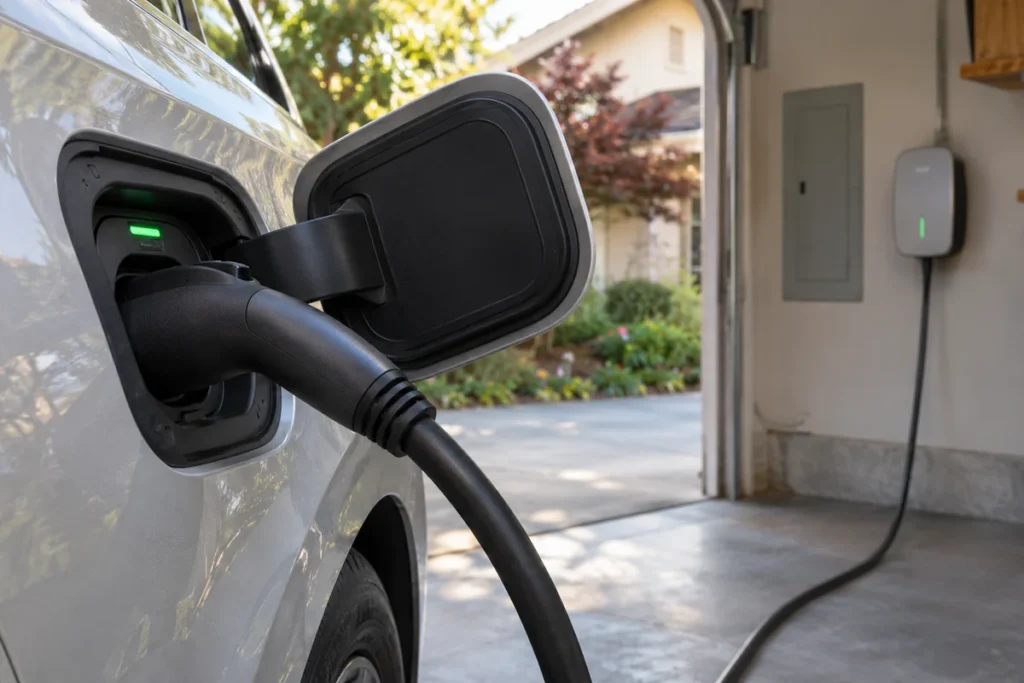
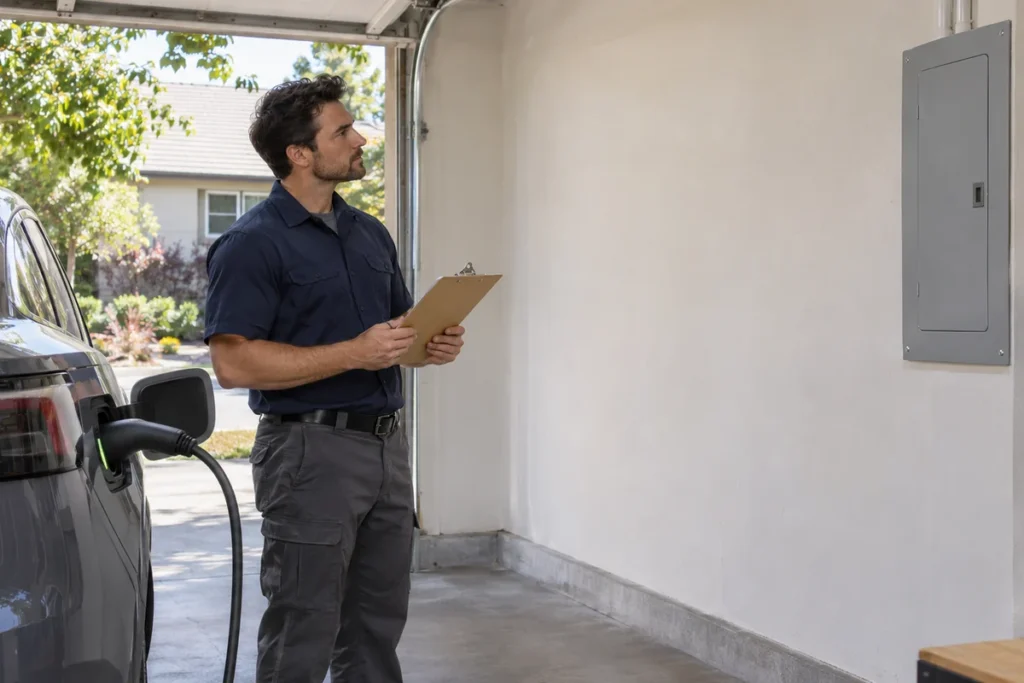

Charge your EV at home with an installation planned around your vehicle, electrical panel and parking location. Concord-based GT Power provides home EV charger installation across Contra Costa County and the Bay Area, including panel assessment, dedicated-circuit wiring, permitting support and charger setup.
Moving beyond a standard 120V outlet? A Level 2 home charger can make overnight charging much more practical. We match the EV charger installation to your vehicle, parking location and daily driving needs.
If you drive regularly or expect a second EV, we can plan charger output and available electrical capacity around dependable home charging today and future expansion tomorrow.
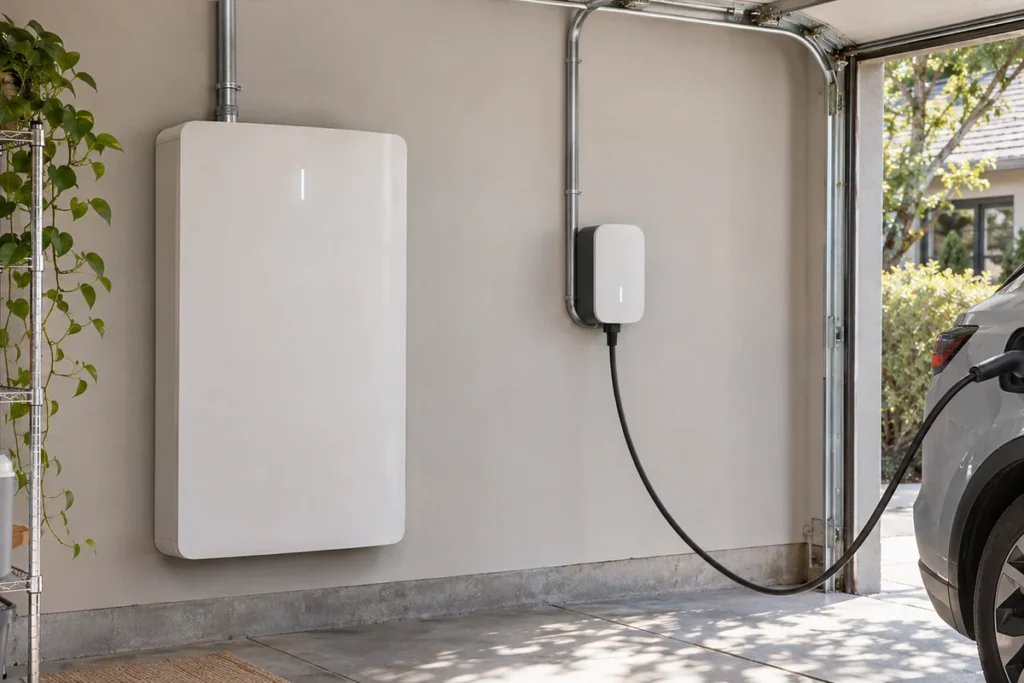
Already have solar or battery storage? GT Power can plan EV charging alongside your existing home-energy system so charging demand, solar production and future loads are considered together.
The most powerful charger is not automatically the right charger for every property. We match the equipment and circuit to what your vehicle can accept and what your home electrical system can safely support.
We Help You Choose the Right Charging Setup
Explain that GT Power reviews:
Charger output and manufacturer requirements
Connector compatibility for the vehicle
Hardwired or compatible plug-in installation
Existing electrical service and panel capacity
Indoor or outdoor EV charger installation needs
Charger location, parking position and cable reach
Many home installations use Level 2 charging on a dedicated 240V circuit. Actual charging speed depends on the vehicle, charger output and available electrical capacity.
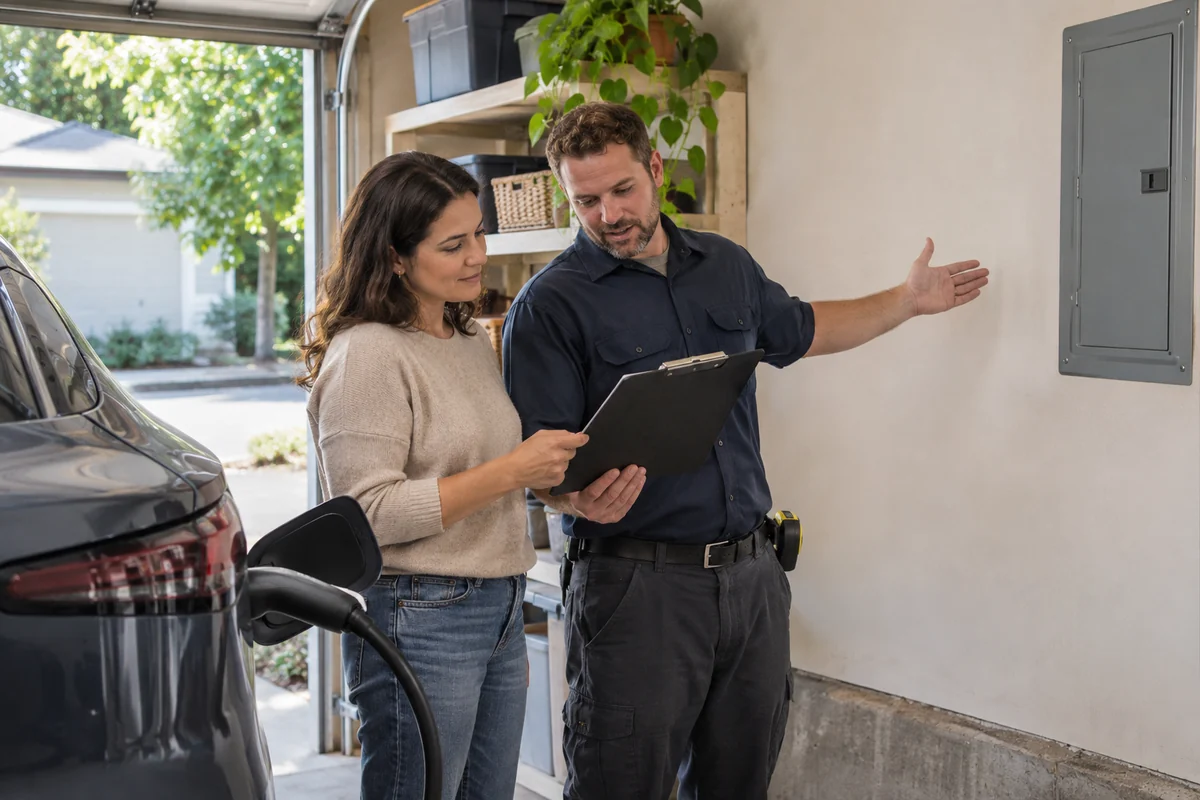
A reliable home EV charger installation starts with the electrical assessment. Before recommending equipment or circuit size, GT Power reviews the panel, existing loads and the physical route to the charger location.

We review the electrical service, panel rating and current household loads to determine whether there is enough capacity for the planned charger.

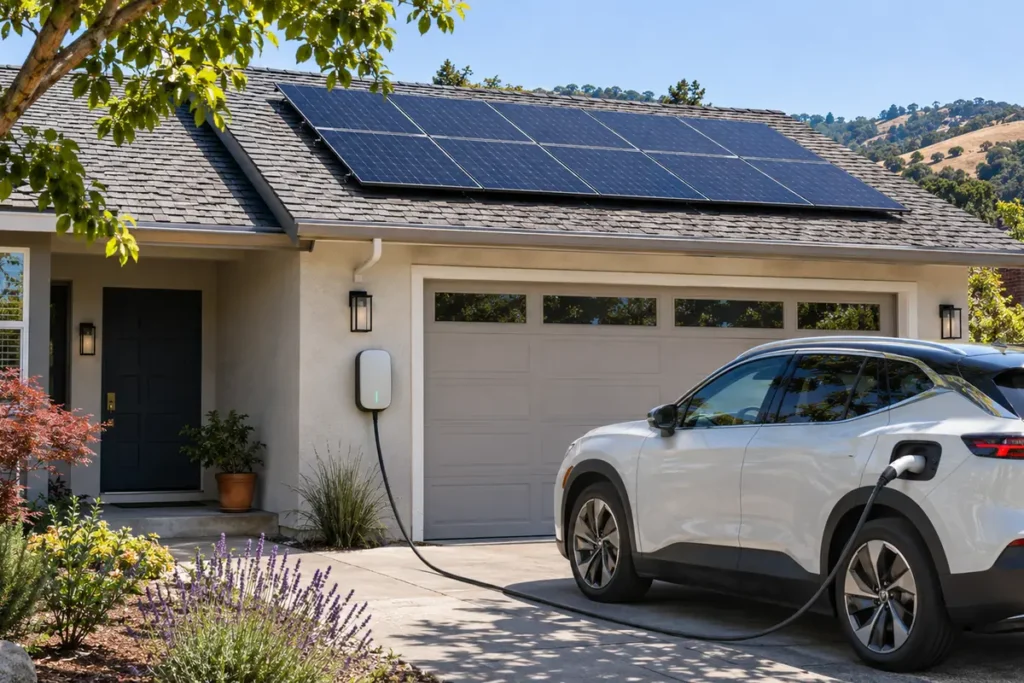
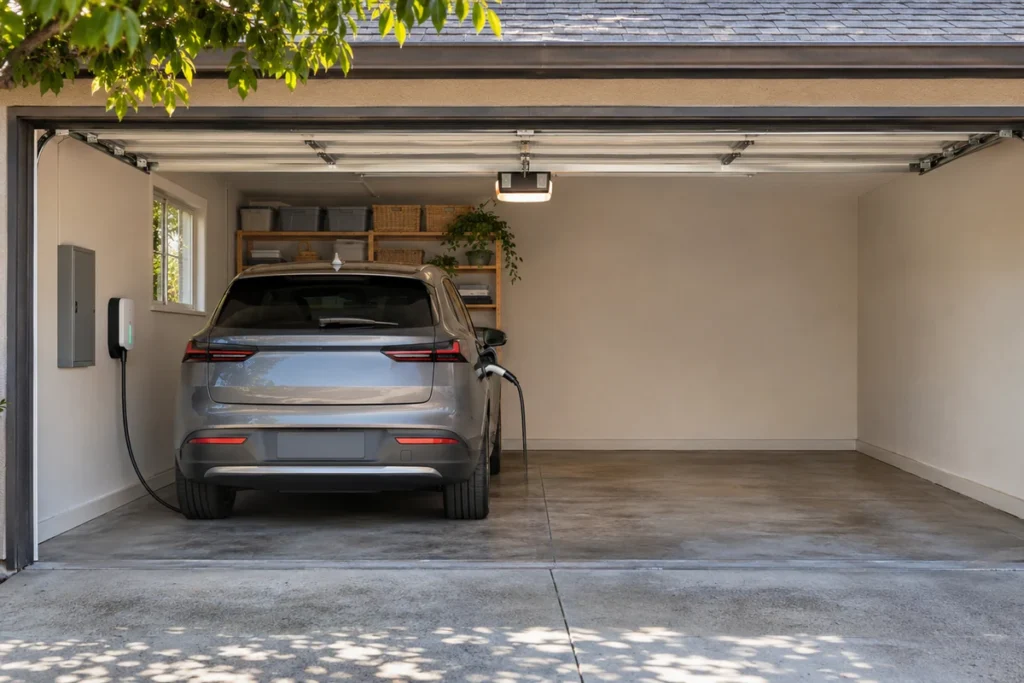
Garage, driveway or outdoor? We plan a practical charger position close to where the EV is normally parked and where daily plug-in use is convenient.

We consider where the vehicle sits, how the charging cable reaches the port and whether the final setup avoids unnecessary cable stretch or awkward routing.

We identify the breaker, circuit size, wiring and protection requirements appropriate for the selected charger and approved charging rate.

Distance from the panel, wall access, exterior conduit, trenching and other site conditions can change the work required and the EV charger installation cost.

Planning a second EV, heat pump, solar, battery storage or other electric upgrades? We can account for future demand before the charging circuit is finalized.
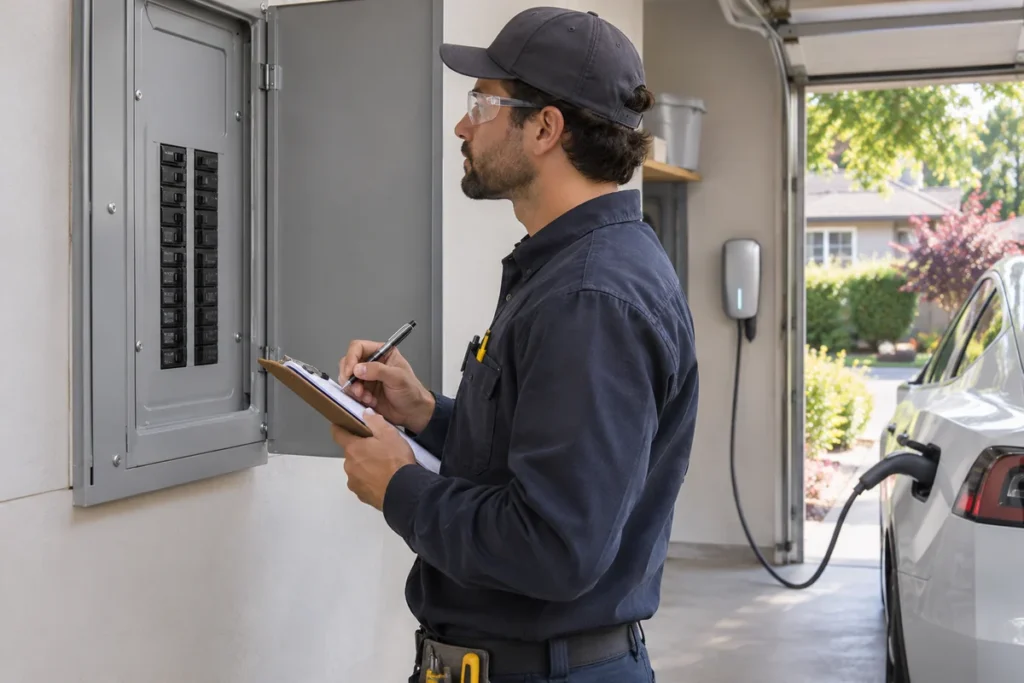
Not every home needs a main-panel upgrade for home EV charger installation. GT Power reviews the existing electrical service first and recommends added electrical work only when the project requires it.
What we assess:
Existing household electrical loads
Breaker and dedicated-circuit requirements
Wiring, conduit or subpanel needs
Main-panel or service upgrades when required
If the panel is already heavily loaded, the right solution depends on the property, charger output and utility requirements. We explain the available options before additional work is approved.
We review your vehicle, selected charger, panel capacity, parking location and preferred wiring route so the electrical scope is clear before installation.
Where a permit is required, we help coordinate the applicable process and prepare the dedicated circuit, breaker, wiring and conduit for the approved installation.
The charger is mounted, connected and tested. We verify the installation and set the appropriate charging output for the approved electrical configuration.
We help with compatible app or Wi-Fi setup when applicable, explain basic charger operation and answer questions about charging schedules and future energy needs.
An EV can become one of the larger new electrical loads in a home. If you already have solar or battery storage — or expect to add them later — GT Power can review the systems together instead of treating each upgrade as a separate project.
Coordinate home charging with your solar-production goals where your schedule allows, and account for the additional electricity your EV may use.
Plan charging demand alongside battery capacity, time-of-use goals and backup priorities so the systems work as part of one home-energy strategy.
Prepare for another EV, additional household loads or future solar and battery expansion before today’s EV charger installation and electrical capacity are finalized.
Home EV charger installation cost can vary widely because every property is different. The main factors are electrical capacity, charger type, distance from the panel and the amount of wiring or construction work required.
A home with available capacity may need less electrical work than a property requiring load management, a subpanel or a service upgrade.
Longer wire runs, finished walls, detached garages, exterior conduit or trenching can increase material and labor requirements.
Hardwired versus plug-in equipment, charger amperage and manufacturer requirements can affect the circuit design and installation scope.
Permit fees, inspections and any required breaker, wiring, conduit or panel work are part of the final project-specific scope.
GT Power is based in Concord and looks beyond the charger itself. We evaluate how home EV charger installation fits with your electrical capacity, property layout, solar, battery storage and future energy plans.

Work with a local team serving homeowners across Concord, Contra Costa County and surrounding Bay Area communities.

Your EV, panel, parking location and driving routine shape the recommendation, not a one-size-fits-all charger or generic circuit.

GT Power helps coordinate the electrical scope, applicable permitting and inspection steps so you know what is required before the project moves forward.

Need more than charging? We can review home EV charger installation alongside solar, battery storage and related home-energy upgrades under one coordinated plan.
GT Power plans home EV charger installation around the selected equipment, vehicle requirements and electrical capacity of the property, with solar and battery integration available when relevant.
These answers address common questions homeowners ask before choosing a charger, approving electrical work or requesting a home EV charger installation quote.
If you don’t find the answers you’re looking for below, don’t worry, we’re always here to assist you. Please feel free to contact us at (800) 577-7124 or via our Contact Us page and we will do our best to help you most efficiently.
The cost to install an EV charger at home depends on panel capacity, charger output, distance from the electrical panel, wiring route, permit requirements and whether extra work such as trenching, a subpanel or service upgrade is needed. A charger close to a panel with available capacity can be a very different project from one in a detached garage. GT Power assesses the property first and provides a project-specific quote.
Possibly — and a panel upgrade is not automatically required. GT Power reviews your service size, existing electrical loads, available breaker space and the output of the charger you want to install. If capacity is limited, we explain the appropriate options before recommending additional work.
Permit and inspection requirements depend on the city and the electrical scope. Some Bay Area jurisdictions require permits for residential EV-charging equipment and dedicated circuits. GT Power can identify the applicable requirements for the installation location and help coordinate the process.
Most EV owners plug into a home charging setup where the vehicle is normally parked. A standard 120V outlet can charge slowly, while a professionally installed Level 2 charger uses a dedicated 240V circuit for faster home charging. The best setup depends on the EV, daily mileage and available electrical capacity.
Yes. EV charging can be planned alongside solar and battery storage so the added vehicle load is considered with household electricity use, solar production and backup goals. The right design depends on system size, driving habits, charging schedule and battery priorities.
A Level 2 EV charger uses a 240-volt connection and charges an electric vehicle much faster than a standard household outlet. For homeowners who drive regularly, it offers the convenience of faster, reliable overnight charging at home.
Not always. Your existing panel may already have enough capacity, but older or heavily loaded panels may need an upgrade. GT Power can evaluate your home’s electrical capacity and recommend the right setup for safe Level 2 EV charger installation.
Yes. A properly designed solar system can help offset the electricity your EV uses for charging. GT Power can review your EV driving needs, home energy use, and solar system to help create a setup that works together efficiently.
Tell us your EV model, charger, parking location and where your electrical panel is located. GT Power can review the likely installation requirements and provide a project-specific home EV charger installation quote.